
How Long Does a Car Battery Last? Signs It's Time to Replace
A dead battery is the number one cause of roadside breakdowns in the UK. Understand lifespan expectations and how to spot a failing battery before you get stranded.
Most standard lead-acid and AGM car batteries have a reliable lifespan of three to five years under typical UK driving conditions. However, recurring short journeys, extreme winter temperatures, and auxiliary electrical demands can accelerate degradation.
Recognizing the early warning signs of battery failure allows you to replace the unit at home or work before you find yourself immobilised on a cold morning.
Why Cold Weather Kills Weak Batteries
When temperatures drop below freezing, a battery's chemical reaction slows down, cutting its available cranking power by up to 35%. Simultaneously, cold engine oil thickens, requiring up to 50% more power from the starter motor.
A battery that performs acceptably in August will frequently collapse on the first frosty morning in November.
5 Warning signs your battery is failing
Sluggish engine turnover
When you turn the ignition, the engine cranks slowly or hesitates noticeably before firing.
Dim headlights and electrical glitches
Headlights appear dull at idle, or dashboard lights flicker when activating seat heaters or blowers.
Clicking sound on ignition
A rapid clicking noise when turning the key indicates insufficient electrical current reaching the starter solenoid.
Swollen battery casing or sulfur smell
Physical swelling or a rotten-egg scent indicates severe overheating and internal battery short-circuiting.
Frequently asked
Can a mobile technician test and replace my battery on my driveway?
Yes. We carry diagnostic battery conductance testers and stock common 12V AGM and standard batteries for on-site fitting across London.
What is the difference between an AGM and standard car battery?
AGM (Absorbent Glass Mat) batteries are designed for modern stop-start vehicles and handle frequent charge cycles. Standard flooded batteries are suitable for vehicles without stop-start systems.
Need mobile tyre help now?
Call or WhatsApp with your location, registration and tyre size — we'll confirm availability and the right next step.
Stranded?
We're already on our way.
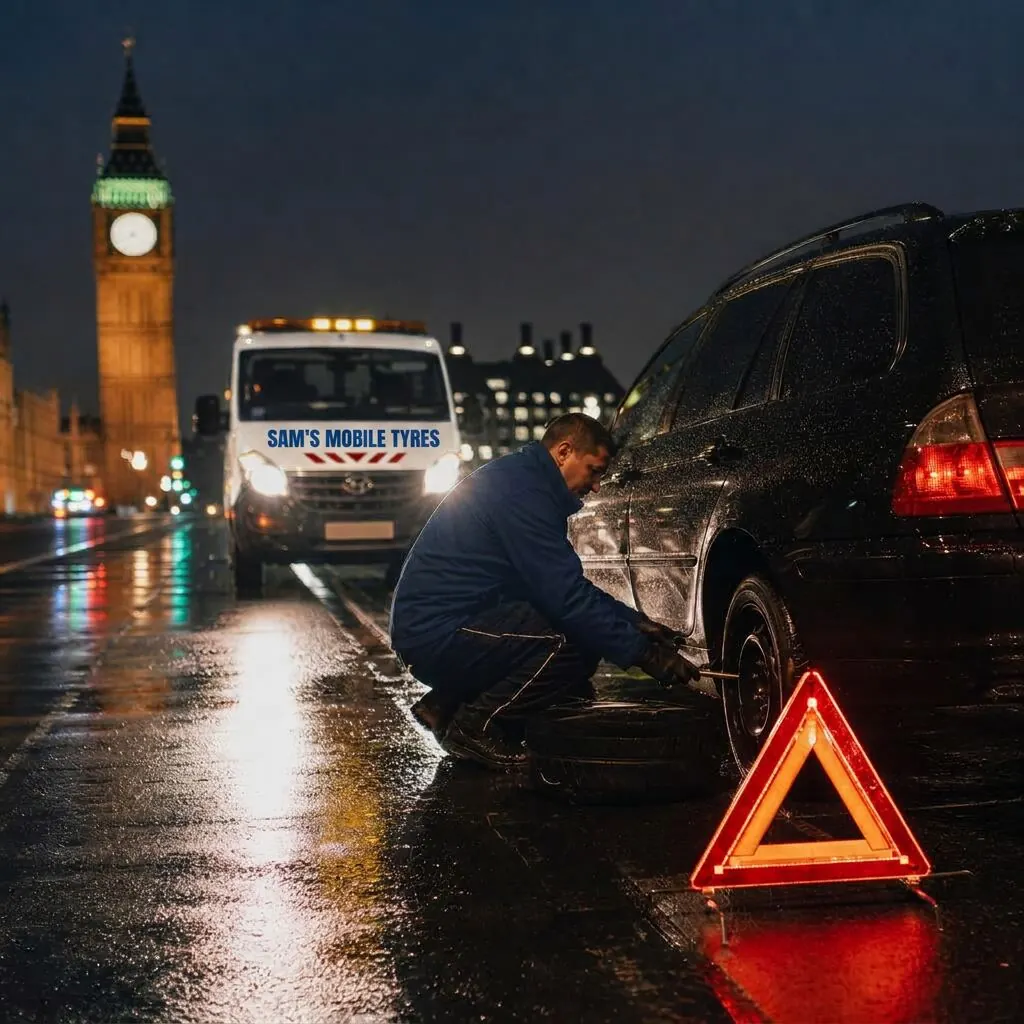
Puncture at 3am. Blowout on the M25. Locked wheel nut. Whatever it is, call and tell us where you are and what has happened.
Share your location, registration and tyre size so we can confirm the suitable help.
Message on WhatsApp