
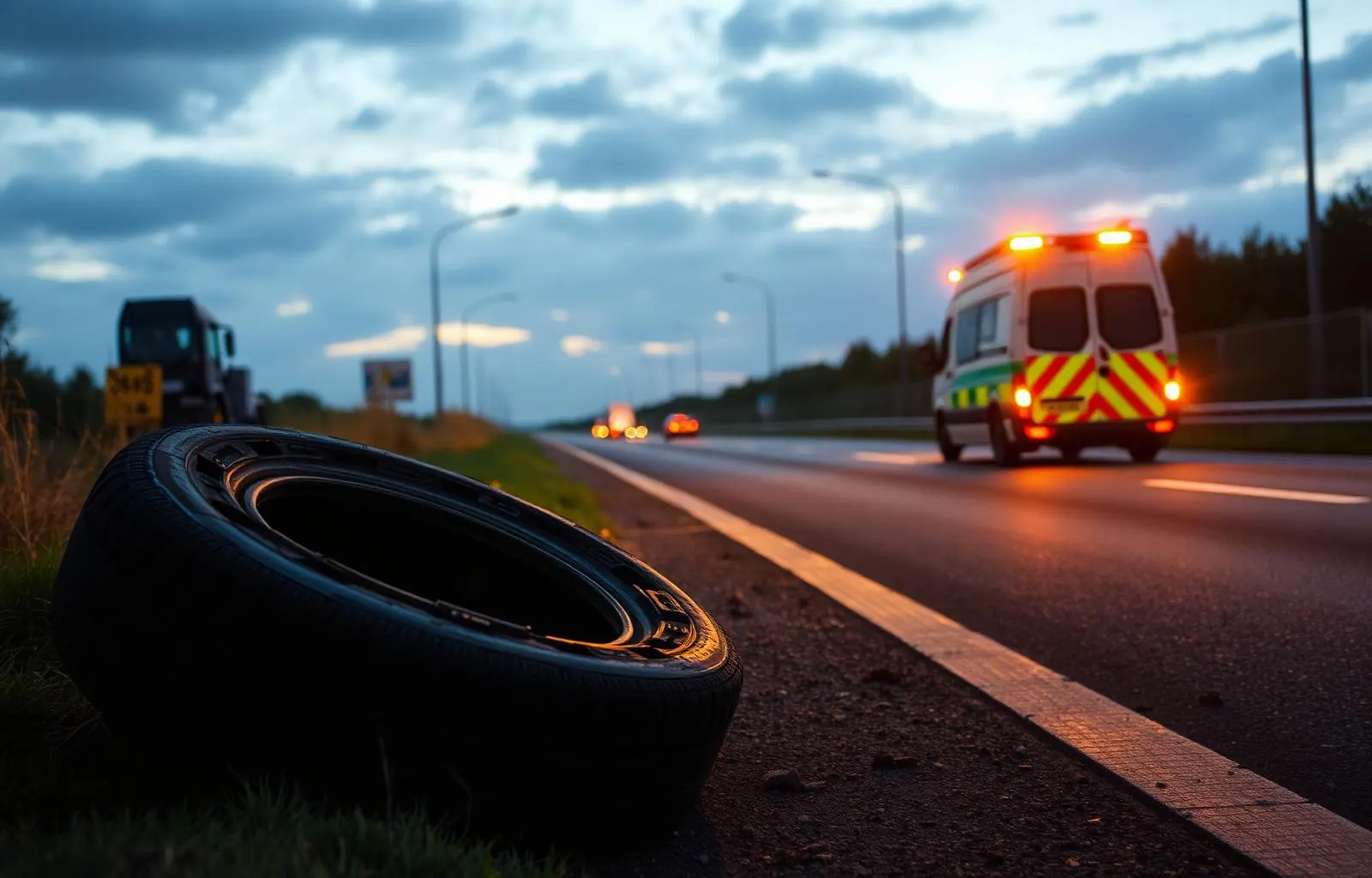
What to do after a tyre blowout on the M25
A blowout at speed is one of the most frightening things that can happen on a motorway. Here is the safe sequence to follow, in order.
A sudden loss of pressure at motorway speed — usually a loud bang followed by the car pulling hard to one side — is a tyre blowout. It is more common on hot days, on underinflated tyres, and on worn tread. What you do in the first ten seconds and the following few minutes matters far more than what caused it.
Large stretches of the M25 operate as an all-lane-running smart motorway, which means there is no continuous hard shoulder. That changes the safe response compared with a traditional motorway, so it is worth knowing the sequence before you need it.
The safe sequence
Follow these steps in order. Do not skip straight to changing the tyre.
Hold the wheel firmly
Grip the steering wheel with both hands, ease off the accelerator and let the car slow naturally. Do not brake hard or swerve — a sudden steering or braking input on a blown tyre is what causes loss of control.
Signal and move left
Once speed has dropped and it is safe, indicate and move across to the nearest verge, emergency refuge area (ERA) or, if on a section with a hard shoulder, the hard shoulder itself.
Get out safely, on the left
If you can, exit the vehicle from the passenger side, away from live traffic, and stand behind a barrier or well back from the carriageway. Put on a hi-vis vest if you have one.
Call for help
On a smart motorway with an ERA, use the roadside SOS phone if available — it identifies your exact location automatically. Otherwise call National Highways (0300 123 5000, free, 24/7) or 999 if you are in a live lane and cannot move.
Arrange the tyre fix
Once you are somewhere safe, call a mobile tyre fitter to attend the refuge area or arrange recovery to a safer location if the refuge area itself isn't suitable for roadside work.
Refuge area vs stopping in a live lane
What matters most is where the car ends up, not how it got there.
- Marked with blue signs roughly every 1.5 miles on all-lane-running sections
- Has an SOS phone that connects directly to National Highways
- Exit the vehicle on the side away from traffic wherever possible
- Wait behind the barrier, not next to the car
- Switch on hazard lights immediately
- Do not attempt to change the tyre yourself
- Stay belted in with seatbelts on if you cannot safely exit
- Call 999 — this is treated as an emergency, not a breakdown
Is a blown tyre repairable?
Almost never. A blowout typically tears the tread or sidewall structure, which falls outside the UK's BS AU 159 repair standard. Treat it as a replacement and have the wheel and surrounding arch checked for secondary damage from debris.
Frequently asked
Is it safe to change a tyre myself on the M25 hard shoulder?
National Highways advises against changing a tyre on a live hard shoulder or running lane — it's one of the most dangerous places on the road network. Get to a refuge area or verge, call for help, and wait well away from the carriageway rather than attempting a roadside change.
What is a smart motorway refuge area (ERA)?
An ERA is a marked lay-by set back from the carriageway on all-lane-running motorway sections, used when there's no continuous hard shoulder. They're spaced at intervals and each has an orange SOS phone that connects directly to the National Highways control room.
Who do I call if I break down on the M25?
National Highways on 0300 123 5000 (free, 24/7) for smart motorway incidents, or 999 if you're stopped in a live lane and can't move to safety. Once you're safely off the carriageway, call a mobile tyre fitter or your recovery provider for the tyre itself.
Can I get a tyre fitted at an emergency refuge area?
It depends on the specific location and traffic conditions — refuge areas are narrow and close to live lanes, so a fitter will assess whether it's safe to work there or whether the vehicle needs to be recovered to a safer spot first.
Need mobile tyre help now?
Call or WhatsApp with your location, registration and tyre size — we'll confirm availability and the right next step.
Stranded?
We're already on our way.
Puncture at 3am. Blowout on the M25. Locked wheel nut. Whatever it is, call and tell us where you are and what has happened.
Share your location, registration and tyre size so we can confirm the suitable help.
Message on WhatsApp