
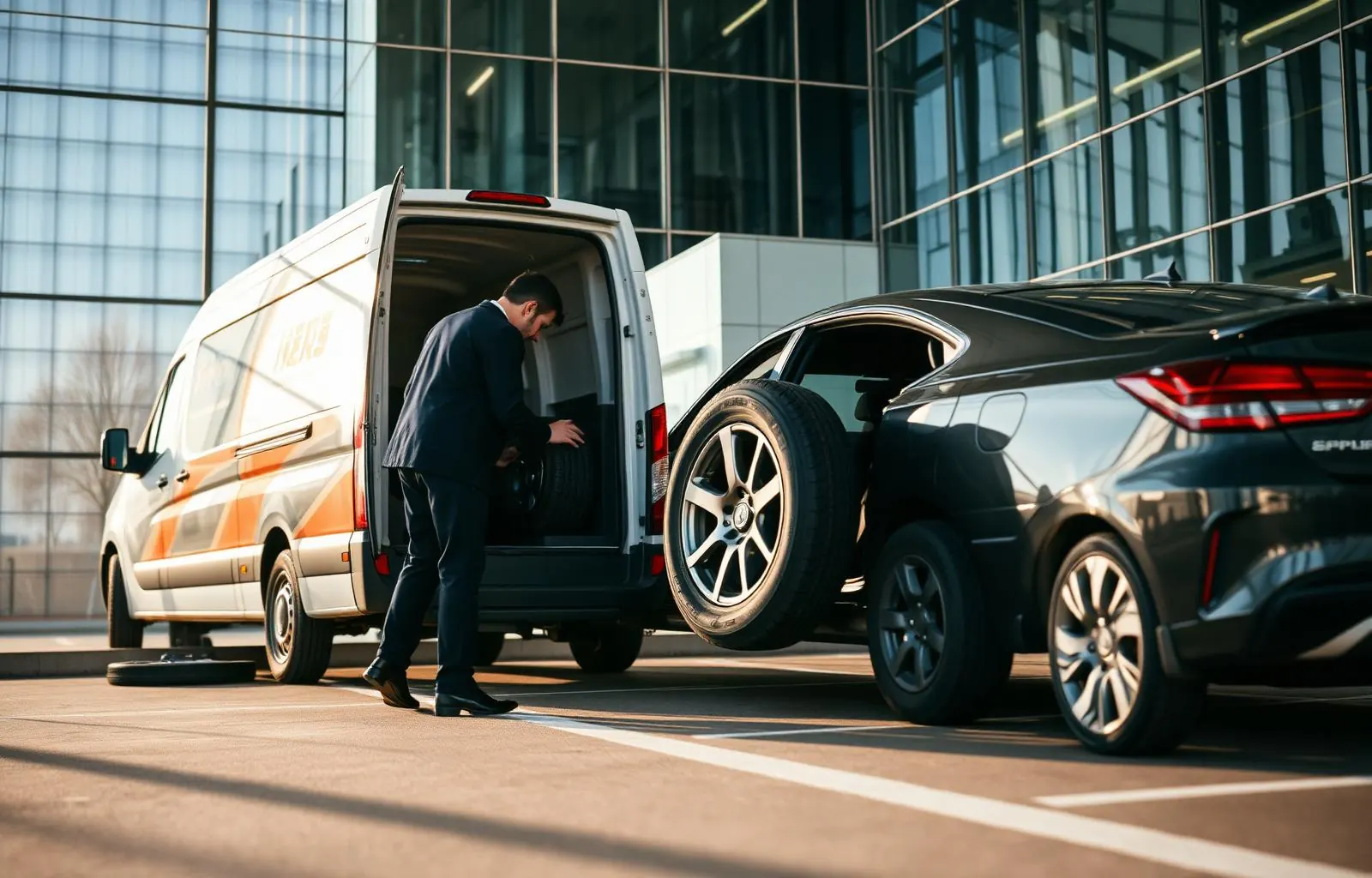
Why Your Steering Wheel Vibrates: Wheel Balancing Explained
Vibrations through your steering wheel or vehicle seat are clear indicators of unbalanced wheels or rim damage. Here's what causes it and how it is fixed.
Even high-specification tyres and alloy wheels are not perfectly uniform in weight distribution. Minute differences in rubber density or wheel manufacturing create heavy spots that cause the wheel to wobble at motorway speeds.
Wheel balancing attaches precision counterweights to your rims so the tyre assembly spins completely true, eliminating steering wheel vibrations, premature suspension wear, and uneven tyre tread scalloping.
Wheel Balancing vs Wheel Alignment
Many drivers confuse wheel balancing with wheel tracking (alignment). Wheel balancing compensates for weight disparities around the rotating wheel unit using clip-on or adhesive weights.
Wheel alignment, conversely, adjusts the angles of the wheels so they point straight and parallel to the vehicle centerline (toe, camber, and caster angles).
Common symptoms of unbalanced tyres
Steering wheel shake at 50 to 70 mph
Vibrations felt directly through the steering wheel usually point to unbalance in the front wheels.
Seat or floorboard vibration
Vibrations felt in the driver's seat or cabin floor typically point to out-of-balance rear wheels.
Cupped or scalloped tread wear
Unbalanced wheels bounce slightly as they rotate, causing irregular wavy hollows across the tyre surface.
Frequently asked
How often should car wheels be balanced?
Wheels should be balanced whenever new tyres are fitted, if a balance weight has fallen off, or every 5,000 to 8,000 miles during routine rotation.
Can mobile tyre fitters balance wheels on a driveway?
Yes. Our mobile fitting vans are equipped with computerized electronic wheel balancers that provide the exact same calibration precision as fixed garage workshops.
Need mobile tyre help now?
Call or WhatsApp with your location, registration and tyre size — we'll confirm availability and the right next step.

Stranded?
We're already on our way.
Puncture at 3am. Blowout on the M25. Locked wheel nut. Whatever it is, call and tell us where you are and what has happened.
Share your location, registration and tyre size so we can confirm the suitable help.
Message on WhatsApp